
The Berkeley Circle and the Communist Party
American PrometheusThis thread traces the loose boundary between Oppenheimer’s progressive activism and Communist Party membership, and why that ambiguity became politically consequential.
increasing Bearing strength in each event
 decreasing
Bearing strength in each eventdecreasingFrom Detachment to Engagement

From Detachment to Engagement
A political awakening
Oppenheimer began attending labor events and supporting social causes after seeing unemployment, racial injustice, and fascism. Jean Tatlock and Berkeley friends brought politics into his daily life.
Activism without a clear label
He worked alongside Communist Party members but did not adopt their discipline or organizational identity. The line between fellowship and affiliation was already blurred.
Money Through Party Channels
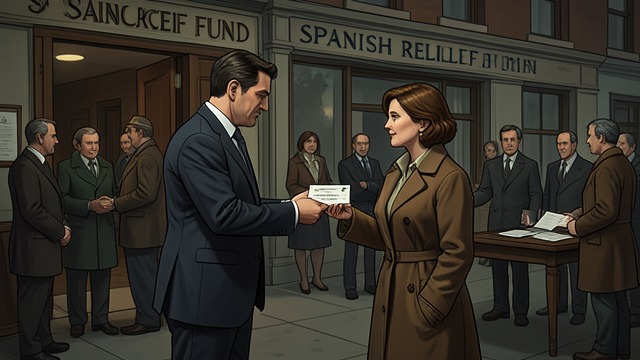
Money Through Party Channels
Contributions for causes
Oppenheimer gave substantial money to Spanish relief and other progressive efforts through people connected to the Communist Party. He thought the funds would support the causes he intended.
A record that could be misread
These donations later became evidence of a deeper political commitment. He did not then believe Communist channels necessarily meant espionage or disloyalty.
A Closed Group in Dispute
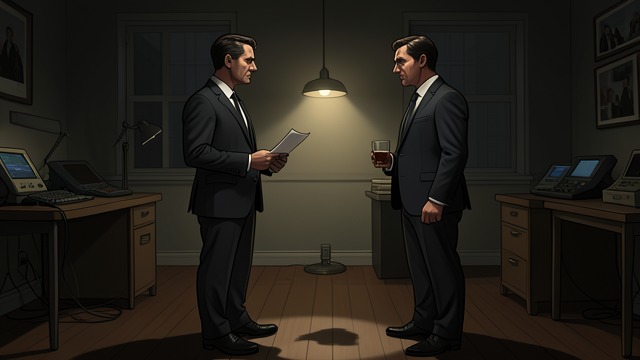
A Closed Group in Dispute
Different memories
Haakon Chevalier and other witnesses described informal meetings as a secret Party unit. Oppenheimer described political discussions and denied ever being a Party member.
Ambiguity endures
Later testimony, memoirs, and FBI records never fully resolved what participants believed the group to be. The difference between a committed sympathizer and a member became central to the security case.
The Nazi-Soviet Shock

The Nazi-Soviet Shock
A moral challenge
The Soviet-German pact disturbed many left-wing intellectuals. Oppenheimer initially helped explain it to friends, then grew increasingly uneasy after learning about Stalinist repression.
A gradual turn
The fall of France and later German invasion of the Soviet Union reshaped his priorities. He moved away from Communist Party circles without making a dramatic public break.
Past Associations Become Charges

Past Associations Become Charges
A dangerous transformation
Associations that had once seemed ordinary in Popular Front circles were reframed as evidence of risk. Investigators used party acquaintances, donations, and meetings to challenge Oppenheimer’s credibility.
A history put on trial
By 1954 the state treated ambiguity itself as incriminating. Oppenheimer’s nuanced account of his past could not compete with the binary demand to be either loyal or suspect.
1934–1937, in Depression-era California
1937–1942, during Spanish relief and labor campaigns
Late 1930s–1942, among Berkeley intellectuals
1939–1941, from the pact to the German invasion
1943–1954, from security interviews to the hearing
